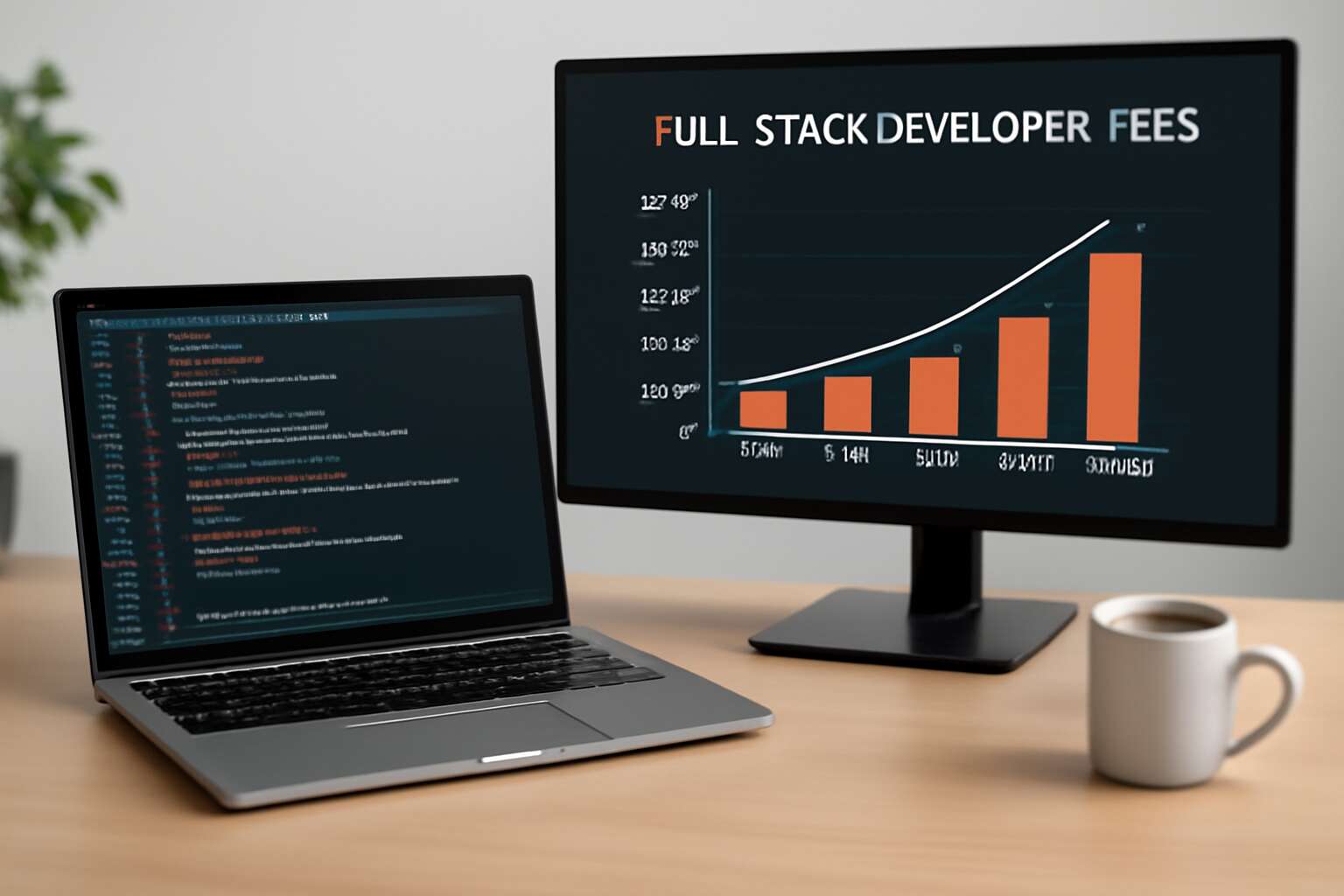
Understanding and evaluating full stack developer fees
Geographic impact on rates
Across South Africa, teams are rethinking budgets as full stack projects mature. Understanding full stack developer fees is the first step to budgeting realistically and avoiding surprises. When you look at the numbers, the mix of skills, project complexity, and whether work is anchored to a local timetable or can flex with remote collaboration all show up in the bill. Our experience is that clarity early prevents drift and dead-end delays!
Geographic impact on rates means SA hubs like Johannesburg and Cape Town often price differently from smaller towns. Rates commonly reflect local cost of living, demand, and the ability to work remotely for international clients. Currency considerations, tax regimes, and project lead times also shape the final figure. A practical view is to compare like-for-like work with peers in similar markets, rather than chasing the lowest quote.
- Local cost of living
- Remote vs on-site
- Project scope and stack
Experience and skill level differences
Strong delivery hinges on more than code. In SA, the gap between junior and lead developers shows up in full stack developer fees, reflecting speed, reliability, and architectural judgment. A common SA pattern is a twofold spread between junior and lead.
Experience tiers map to value in the following way:
- Junior (0-2 years): lower rates, high growth potential, solid fundamentals.
- Mid-level (3-5 years): steady output, broader stacks, dependable collaboration.
- Senior/Lead (5+ years): strategic direction, mentoring, and risk management command a premium.
Beyond years, problem solving, system design, and the chosen stack push the final figures, making the landscape nuanced rather than rigid.
Technology stack and specialization effects
Across South Africa’s tech corridors, the rhythm of a project often rides on the weight of its choices. The hook is simple: the deeper the architecture, the higher the full stack developer fees, yet the payoff is steady reliability and speed. I watch clients rethink budgets when architecture promises fewer reworks, and a lean stack can shave weeks from delivery.
Technology stack and specialization effects shape the ladder of cost. Different stacks carry different premiums, especially when mastery spans the front and back ends.
- MERN/MEAN ecosystems for rapid iteration
- Python/Django for data-driven apps
- Java/Spring for enterprise-scale systems
Beyond years, problem solving and system design push the final figures. In short, these fees mirror complexity, risk, and the quiet obligation to maintain, rather than brute hours alone. That is why these fees are a testament to craft as much as forecast.
Contract type and project scope influence
Fees are the shadows that decide whether a project shines or falters. In South Africa’s tech corridors, understanding full stack developer fees begins with how work is scoped and how deliverables breathe. A careful discovery phase unmasks hidden toil and steadies the budget against future reworks.
Contract type shapes the bottom line. A fixed-price approach grants predictability but can buckle under scope creep; time-and-materials rewards honest effort and grows with complexity; a retainer invites ongoing partnership and steady maintenance cadence.
- Fixed-price: clarity and milestones; risk on surprises or misread scope.
- Time-and-materials: flexibility; cost rises with added effort or complexity.
- Retainer: steady collaboration; predictable maintenance costs.
Project scope is the true crucible. Each feature, integration, and data pathway tightens or loosens the final figure of full stack developer fees. Scope creep gnaws at margins; a well defined boundary preserves reliability, speed, and the promise of steady delivery.
Pricing models and how fees are calculated
Hourly versus fixed-price billing
Pricing for full stack developer fees often hinges on two real choices: hourly rates that move with the work, and fixed-price arrangements that set a ceiling. In the South African market, the decision is as much about risk tolerance as it is about math—hourly billing rewards flexibility, while fixed pricing rewards predictability, moving with a ghostly rhythm. With hourly billing, you pay for attention and iterations; fixed-price contracts reward tight scoping and clear milestones. The optimal path blends control with velocity, matching project volatility to commercial appetite.
- Clear scope and milestones
- Defined change processes
- Risk buffers and contingency plans
Some teams prefer a hybrid: milestone payments with retainers, preserving the best of both worlds and shaping the narrative around full stack developer fees.
Milestone-based pricing and payments
Billing should be a daylight path, not a trapdoor. In South Africa’s vibrant tech scene, milestone-based pricing reframes full stack developer fees around tangible deliverables and real progress. I watch teams breathe easier when milestones map the journey, letting momentum grow without sacrificing craft.
Fees are calculated from clearly defined milestones: a base price anchored to scope, plus measured risk buffers and contingency plans. Change processes are baked in to prevent drift; payments flow on milestone completion, with a gentle retainer option for ongoing maintenance that stabilizes cash flow.
- Discovery and scoping
- Architecture and design validation
- Core development sprint
- Quality assurance and testing
- Deployment and post-launch support
Ultimately, milestone pricing blends control with velocity, shaping the narrative of full stack developer fees into a project’s natural arc.
Value-based pricing considerations
South Africa’s tech scene hums with potential, and the boldest pricing aligns with outcomes rather than hours. When fees move with tangible deliverables, teams breathe easier and ship with confidence. In fact, projects tied to outcomes report up to 30% faster time-to-market. The idea is clear: full stack developer fees that reflect real value, not just time spent.
Value-based pricing weighs more than features; it measures impact, urgency, and risk. The price should mirror business outcomes, time-to-market, and maintenance needs. Consider these factors:
- Expected business impact and measurable outcomes
- Time-to-market and feature criticality
- Maintenance, support, and future scalability
By framing value around outcomes and resilience, teams set expectations that honor craft while keeping cash flow sane. The dialogue grows richer when everyone can see how risk, uptime, and user delight translate into price.
Discounts, retainers, and long-term engagements
Pricing models vary, and fees are a mirror of commitment as much as capability. ‘Pricing should bend with value, not the clock,’ a partner once told me, and in South Africa’s growing tech towns that mindset is taking root. Discounts, retainers, and long-term engagements bring rhythm to projects and reduce admin drag. When discussing full stack developer fees, outcomes, reliability, and sustained support are what truly move the needle.
- Discounts for longer engagements or higher velocity work
- Retainers that cover ongoing maintenance, quick responses, and steady collaboration
- Long-term engagements offering predictable monthly pricing with built-in scope flexibility
A shared cadence emerges as trust grows, whether in a city office or a wind-swept farm town; the work feels lighter when teams know what to expect month to month.
Industry benchmarks and ranges by region
North America and Western Europe benchmarks
Industry benchmarks place North America at the high end of the market. Typical rates for full stack developer fees hover between $75 and $150+ per hour, with occasional peaks for specialized stacks. Western Europe follows closely, where rates commonly run €60–€120 per hour. For South Africa buyers, these figures highlight the value of local options and time-to-delivery!
- North America: $75–$150+ per hour
- Western Europe: €60–€120 per hour
These benchmarks offer a realistic lens on budgeting, procurement, and expectations for project scope in a local market, with currency considerations a practical factor for cross-border engagements.
Asia and Eastern Europe benchmarks
Asia offers a wide spectrum for full stack developer fees, driven by market maturity and labor cost. Typical rates sit in the $20–$60 per hour band, with spikes for specialized stacks such as real-time systems or fintech backends.
- Asia: $20–$60 per hour, higher for niche stacks and regulated sectors.
- Eastern Europe: €25–€70 per hour, with premium rates for security-focused or enterprise-grade work.
For South Africa buyers, these regional benchmarks shape bids and risk assessments. These regional patterns clarify how full stack developer fees vary by market and inform decisions. Asia remains price-conscious, while Eastern Europe combines cost-efficiency with strong engineering discipline, making it a compelling nearshore option for multi-region delivery.
Freelancers versus agencies: fee differences
Industry benchmarks stretch like constellations across the map, showing how value shifts with region, provider, and project soul. The freelancers-versus-agencies dynamic resists a single tune; it is a polyphony where speed, quality, and risk pull in different directions.
For South Africa buyers, the regional panorama informs bids and risk assessments, shaping expectations around full stack developer fees.
- Freelancers often offer lower base rates with tighter scope and variable availability.
- Agencies provide broader teams, formal QA, and clearer milestones at higher ceilings.
- Hybrid models blend freelance specialists with agency support for steadier delivery.
These patterns create a living map, where nearshore diligence and regional maturity meet the ambition of multi-region delivery.
Impact of project type and company size
Industry benchmarks reveal how regional ranges unfold like constellations. In South Africa, full stack developer fees for skilled developers commonly land in the mid-to-upper tier of global rates, roughly ZAR 400 to ZAR 900 per hour for mid-to-senior talent.
Project type and company size sculpt the price arc, turning a simple enhancement into a strategic investment.
- MVPs and quick turnarounds for startups
- Full-featured platforms for growing teams
- Enterprise-grade applications with governance and security
Multi-region delivery, with nearshore options, can influence both expectations and budgets: upfront architecture and scoping set the stage, while steady delivery shapes the long-term value of the full stack effort.
Negotiation strategies to secure fair fees
Preparing a detailed project brief and requirements
In a market where urgency meets uncertainty, negotiation becomes a superpower, almost prophetic. When you size up full stack developer fees, you’re weighing delivery speed, code quality, and long-term value in one breath.
- Anchor negotiations to clear outcomes and measurable results
- Pair market realities with project complexity to justify value
- Look for longer contracts or retainer arrangements that stabilize fees
Preparing a project brief and requirements sharpens the ask. Include scope, milestones, tech stack, integrations, acceptance criteria, and risk factors, plus timing windows relevant to the South African market. A brief helps define what counts as value and makes full stack developer fees predictable within Rands for local teams and remote collaborations alike.
The narrative around fees should feel inevitable, not argued. A clear brief, honest expectations, and a calm, value-forward stance can tilt discussions toward fair outcomes, even when the room is crowded with offers.
Assessing proposals and measuring value
“Value is what you can prove, not what you promise,” a mentor once sneered, and in South Africa’s bustling tech corridors that quip has become currency. When negotiating full stack developer fees, the aim is clarity over cleverness—clear outcomes, measurable value, and a cadence of delivery that can be audited as easily as a wristwatch. Proposals should be weighed not merely for price but for confidence in velocity, quality, and long-term maintenance.
Assessments should anchor to outcomes; when proposals are transparent about scope and risk, the room tightens around fair value.
- Value aligns with outcomes, not hours
- Proposals include measurable acceptance criteria
- Longer partnerships invite fee stability and predictability
When both sides align on value, full stack developer fees drift toward fairness and predictability.
Negotiation tactics that protect quality
In South Africa’s fast-moving tech corridors, 62% of tech contracts stumble on scope clarity—and clarity speaks louder than clever rhetoric. Negotiation strategies around full stack developer fees hinge on translating intent into measurable outcomes and a cadence of delivery that can be audited like a wristwatch.
Here are practical moves that protect quality and fairness:
- Anchor pricing to milestones tied to observable outcomes.
- Declare acceptance criteria up front and require sign-off at each phase.
- Include a performance guard that preserves quality without starving the team.
When both sides share risk and reward, fees drift toward fairness and predictability.
When to adjust scope instead of price
In SA’s fast-moving tech corridors, 62% of tech contracts stumble on scope clarity—and clarity speaks louder than clever rhetoric. When negotiating, the focus shifts from price labels to outcomes and the project’s evolution. If requirements are unsettled, adjust scope rather than price. This keeps teams honest and budgets sane, and it preserves quality across sprints. That’s how full stack developer fees stay fair and predictable.
A few guiding principles help keep scope adjustments fair.
- Align changes to measurable outcomes and user value
- Require written scope changes with mutual sign-off
- Build in room to revisit pricing only when the horizon shifts
When both sides share risk, fairness follows and trust deepens. That approach keeps full stack developer fees fair and predictable in a market where clarity matters.




0 Comments