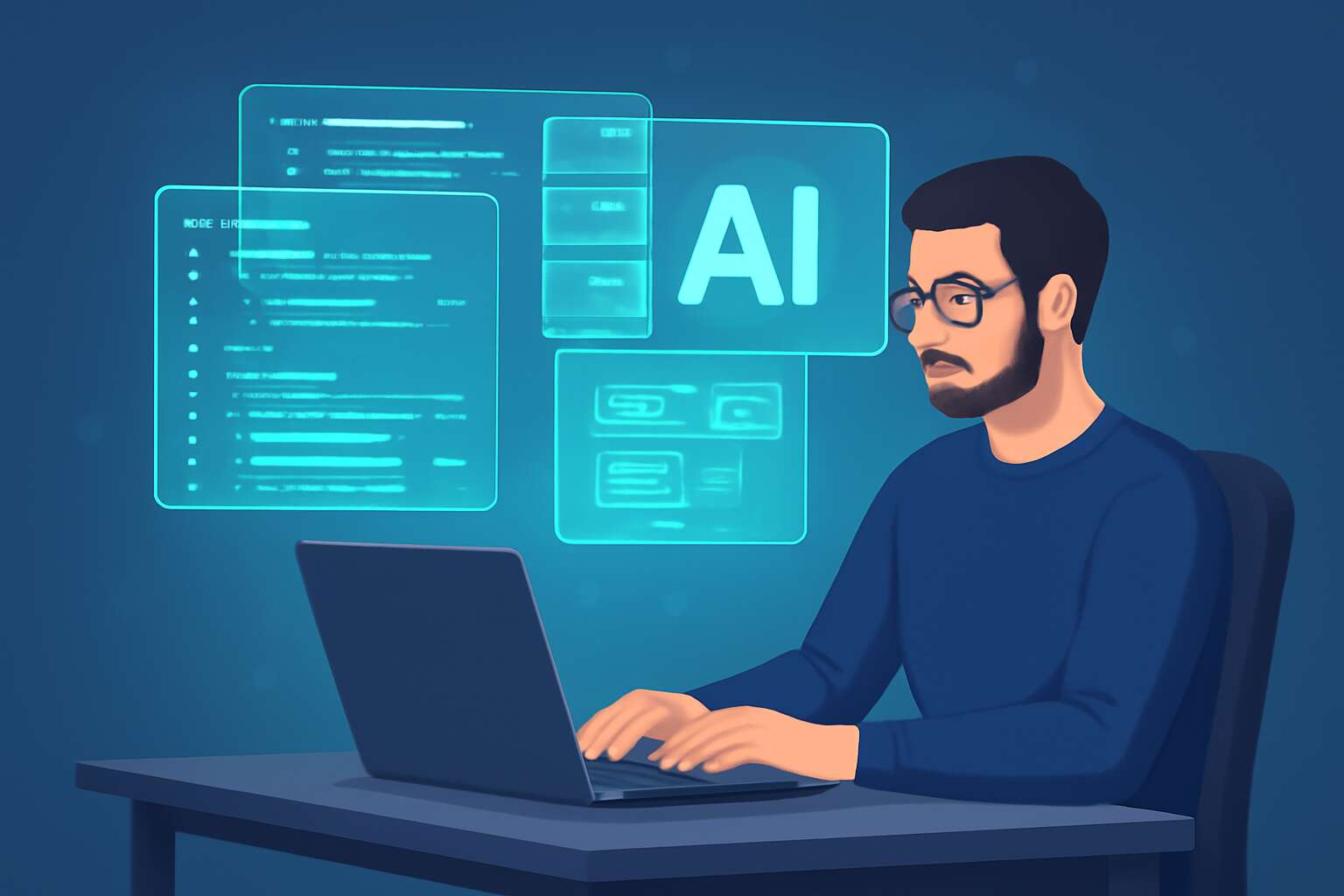
Comprehensive outline on AI’s impact on full stack development
Impact of AI on frontend and backend roles
Across South Africa’s vibrant dev scene, AI is not a thief in the night but a chorus guiding developers toward faster, safer code. “The future of software is not man vs. machine, but man with machine,” a CTO once told me, and the truth hums in our keyboards.
A comprehensive outline on AI’s impact on full stack development reveals two streams: frontend and backend. This prompts the question: is ai replace full stack developer? The front end gains from AI-assisted UI generation, real-time accessibility checks, and smarter tests; the back end benefits from data modeling, API composition, and smarter orchestration.
- Frontend: AI-generated UI blocks and adaptive components
- Backend: AI-assisted data models, APIs, and governance
- Cross-cutting: testing, deployment, monitoring automation
In South Africa’s enterprises, these tools don’t erase roles; they shift them toward design and governance.
Skills evolution and career paths for developers
South Africa’s vibrant dev scene is learning to dance with AI, not bow to it. Nearly 60% of SA firms are piloting AI-assisted tooling, a stat that reframes risk as curiosity. “The future is man with machine,” a CTO told me, and the keyboard chorus agrees.
Comprehensive outline on AI’s impact on full stack development highlights how skills evolve and career paths unfold for developers. The shift favors design thinking, governance, and platform literacy—capabilities that amplify, rather than replace, human judgment. Consider these emergent directions:
- Hybrid roles blending UX sensitivity with data-driven architecture
- AI literacy and ethical governance as core competencies
- Platform engineering and API governance as career pivots
So, is ai replace full stack developer? In South Africa, the answer is nuanced: talent migrates toward stewardship of systems, cross-functional collaboration, and responsible innovation. Machines handle routine scoping and orchestration, while humans shape value, safety, and real-world impact.
Technical capabilities of AI in full stack work
Across South Africa’s tech hubs, the instinct is to partner with machines, not fight them. Nearly 60% of SA firms are piloting AI-assisted tooling, a sign that risk is becoming curiosity.
A concise outline on AI’s impact reveals technical capabilities: generating boilerplate, guiding testing, and shaping platform governance.
- Generative AI for scaffolding and boilerplate code that respects project constraints
- AI-driven testing, anomaly detection, and continuous integration workflows
- Platform engineering focus: API governance, observability, and policy enforcement
So, is ai replace full stack developer? The SA reality leans toward stewardship of systems, cross-functional collaboration, and responsible innovation. Machines handle routine scoping, while humans shape value and safety.
Organizational strategies for AI adoption
Across SA’s tech hubs, AI adoption is less doom and more governance. A recent survey shows nearly 60% of firms piloting AI-assisted tooling, signaling curiosity overtaking fear!
Comprehensive outline on AI’s impact emphasizes organizational strategy over code, focusing on business alignment, risk framing, and scalable workflows.
- Strategic alignment with business metrics and product goals
- Cross-functional, product-minded teams sharing accountability
- Governance, observability, and policy enforcement to guard security
So, is ai replace full stack developer? The SA reality leans toward stewardship of systems, cross-functional collaboration, and responsible innovation. Machines handle routine scoping, while humans shape value and safety.



0 Comments