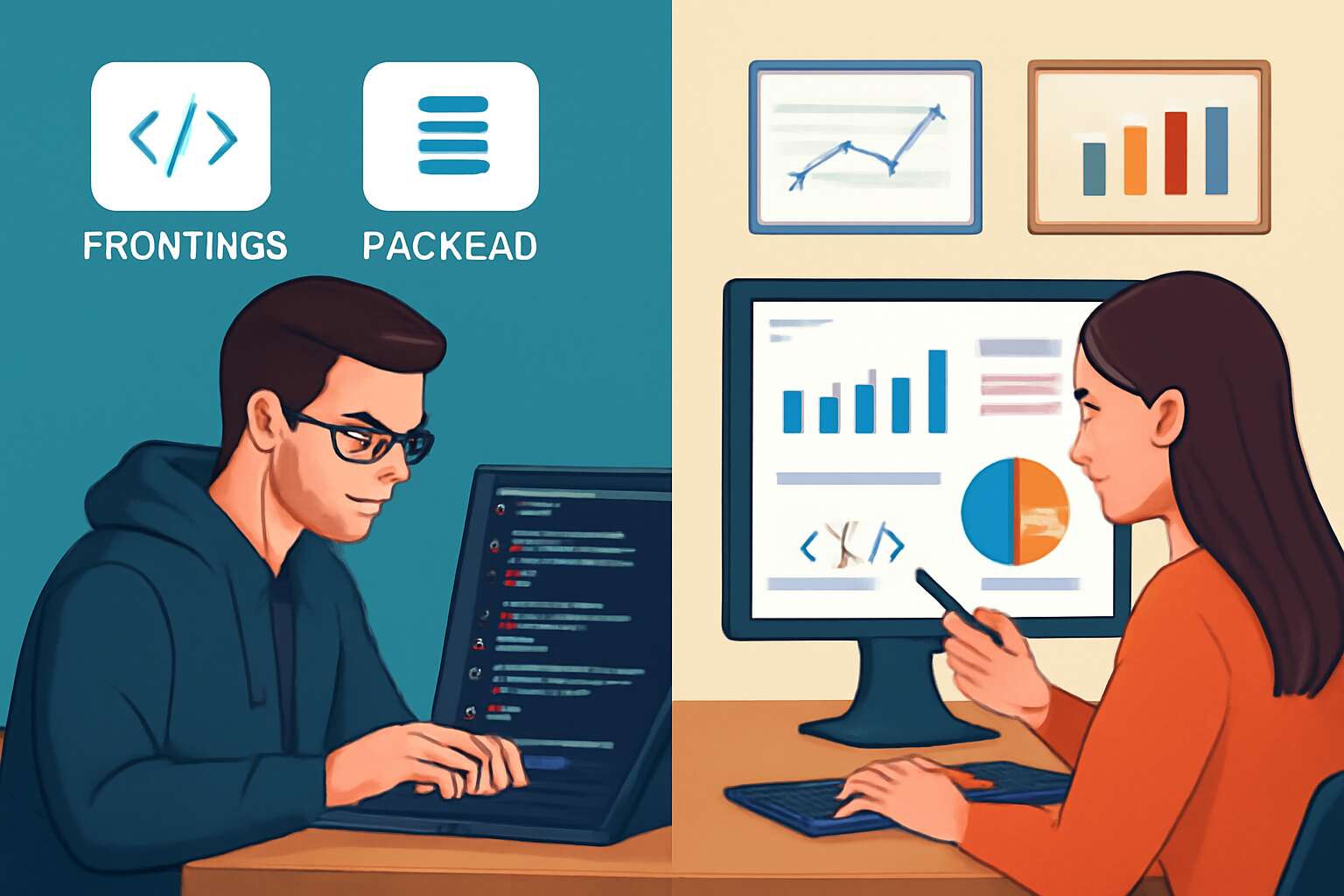
Role Overview: Full-Stack Engineer and Data Analyst
Roles and responsibilities across teams
Across South Africa’s thriving tech scene, the debate around the full stack developer vs data analyst shapes how projects evolve from concept to live product. A full stack engineer fuses front-end polish with back-end robustness, weaving UI and data flows into an alchemy of function, while a data analyst deciphers numbers into clear, action-ready insights. Both roles span product, engineering, and business squads.
Across teams, these roles collaborate to turn vision into measurable impact:
- Full-stack engineers align UI, APIs, and data flows to deliver cohesive features.
- Data analysts extract insights, validate hypotheses, and surface dashboards used by product and sales.
- Cross-functional partners, including design and operations, ensure data governance and performance metrics are respected.
In SA teams, this cross-pollination accelerates product viability and responsible data handling, where dashboards tell stories and code ships with confidence.
Typical day-to-day tasks for each role
Bold morning light spills over Cape Town and Johannesburg as teams sharpen their focus. In the ongoing debate around the full stack developer vs data analyst, South Africa’s tech scene tests ideas against reality, mapping capabilities from concept to live product with precision.
Full-Stack Engineer: A full-stack engineer starts the day tuning interfaces and services that users touch and systems run on. They blend UI polish with back-end resilience, weaving data flows into features and quashing bottlenecks before they appear.
- Plan and implement user-facing features with responsive design
- Integrate front-end with APIs and data services
- Debug, test, and optimize end-to-end performance
Data Analyst: A data analyst traces questions through data with curiosity and discipline. They translate raw numbers into dashboards that guide product bets and operations.
- Frame questions, pull data, and explore for insights
- Build dashboards and visualizations for stakeholders
- Validate findings and monitor data quality
How the two roles complement cross-functional projects
In South Africa’s tech corridors, morning light spills over Cape Town and Johannesburg, and work becomes a conversation between craft and curiosity. The ongoing debate of full stack developer vs data analyst reveals two minds steering the same project: one shapes the interface, the other translates numbers into meaning. They seek clarity, resilience, and the stubborn honesty to test ideas against reality!
Role Overview: Full-Stack Engineer and Data Analyst — they complement cross-functional projects by weaving interfaces and insights into a single narrative.
- Bridge between user flows and data signals
- Rapid iterations guided by usability and metrics
- Shared ownership of product quality and reliability
In a South African context, this partnership is stewardship, not rivalry. When builder and watcher collaborate, teams endure pressure and turn uncertainty into insight.
Industry contexts where each role shines
“If you can quantify it, you can fix it,” quips a Cape Town CTO, and SA’s tech scene hums louder when numbers drive decisions. Speed meets scrutiny in these cross-functional corridors.
Role Overview: Full-Stack Engineer and Data Analyst — they complement cross-functional projects by weaving interfaces and insights into a single narrative. In the ongoing debate about full stack developer vs data analyst, the two minds steer the same project—one shapes the interface, the other translates numbers into meaning.
In the South African context, here are industry contexts where each shines:
- Fintech and financial services demand secure, scalable dashboards.
- Retail and e-commerce benefit from real-time analytics.
- Telecoms and logistics rely on reliable APIs and forecasting.
Core Skills and Tooling
Essential technical skills for each role
In SA’s digital savannah, the full stack developer vs data analyst arc drew 42% more job postings last year, a sign that versatile hands are prized. “To read code is to read a map,” a mentor once said.
Core skills for a full stack developer span front-end finesse and back-end alchemy: crafting responsive interfaces, architecting services, and shaping data models that endure. They thrive where problems demand end-to-end thinking and tangible user outcomes.
A data analyst trains a different compass—statistics turned into stories. Their core skills include data wrangling, exploratory analysis, and compelling visualization, always with a habit of turning noise into signal.
Essential tooling ties these skills to action.
- Full stack tooling: React or Vue, Node.js, SQL/NoSQL, REST APIs
- Data analytics tooling: SQL, Python (pandas), Excel, Tableau/Power BI
Together, these tools empower SA teams to ship features swiftly and illuminate decisions with evidence.
Overlapping skills and common tools
Last year, SA cross-functional squads blending full stack developer vs data analyst chops delivered features 28% faster, turning ideas into tangible outcomes sooner. In practice, people talk about a continuum between these roles, not a split. Core skills hinge on curiosity, clean data, and practical problem-solving.
- SQL and data querying
- API integration and service thinking
- Modular problem-solving and debugging
- Collaborative communication and iteration
On the tooling side, overlapping kits include SQL, Python (pandas), Excel, and visualization platforms like Tableau or Power BI. Teams also lean on REST APIs and version control to coordinate work across this spectrum, ensuring features ship cleanly and insights land with impact.
Key programming languages and data tools
Across South Africa’s digital frontier, the choice between full stack developer vs data analyst isn’t a wall—it’s a spectrum. Last year, cross-functional squads blending both chops moved features 28% faster, turning ideas into outcomes with precision. At the core, curiosity, clean data, and practical problem-solving light the way, guiding teams through ambiguity with grit and poise—almost alchemy in motion.
Core skills that bridge these roles include:
- SQL and data querying
- API integration and service thinking
- Modular problem-solving and debugging
- Collaborative communication and iteration
On the tooling side, you’ll find a familiar toolkit across the spectrum. The common payload includes SQL, Python (pandas), Excel, and visualization platforms like Tableau or Power BI, REST APIs, and Git to coordinate work across this spectrum.
Certifications and learning resources
In South Africa’s evolving tech landscape, the line between a full stack developer vs data analyst blurs into a spectrum of craft! Core capabilities lean into curiosity, clean data, and turning ambiguity into usable features.
Core skills that bridge the roles include a fluency in data querying, API-thinking, modular problem-solving, and collaborative storytelling that keeps teams aligned.
On the tooling side, a shared payload spans SQL, Python (pandas), Excel, and visualization platforms like Tableau or Power BI, REST APIs, and Git.
Certifications and learning resources map the spectrum: analytics certificates, full stack tracks, and cloud credentials. Practical resources include Coursera, edX, LinkedIn Learning, and local bootcamps and university extension programs.
Performance metrics and benchmarking
In South Africa’s evolving tech scene, the distinction between a full stack developer vs data analyst blurs into a single spectrum of craft. A recent SA tech survey notes teams that align these roles cut project cycle times by up to 40%. Core skills—curiosity, data fluency, and the ability to turn ambiguity into usable features—keep both roles resilient.
Performance metrics and benchmarking anchor this cross-functional work. Velocity, quality, and impact become the common yardsticks, not siloed checkboxes. To evaluate fairly, teams track delivery frequency, data accuracy, and how quickly insights translate into decisions.
- Cycle time and deployment frequency
- Data quality and reproducibility
- Decision speed and business impact
- Stakeholder alignment and cross-team throughput
When the two roles share a dashboard mindset—with SQL, Python, and visualization tools—the spectrum stays useful and fair for South African teams navigating cloud transitions and local business realities.
Career Trajectories and Salary Insights
Typical career paths within each role
In South Africa’s buzzing tech scene, salaries are rising fast—some surveys show 15-20% annual bumps in urban hubs. Salaries typically span roughly R300k to R900k across roles and seniorities. The choice between two compelling tracks—full stack developer vs data analyst—shapes your career trajectory, earnings, and growth ceiling!
Career paths unfold in steps:
- Full stack developer: start as a junior coder, advance to a versatile engineer, then senior, lead, and architect—each rung widening influence and pay.
- Data analyst: begin as junior, rise to senior analytics, then analytics lead or manager—where business storytelling meets data fluency and value.
Urban centers in SA reward specialization, yet versatile skills offer resilience. Whether you chase breadth as a full stack developer or as a data analyst, ongoing learning keeps the ladder climbing.
Salary ranges by region and experience
Across South Africa’s buzzing tech scene, career trajectories branch distinctly when comparing full stack developer vs data analyst. Salaries rise swiftly in urban hubs, propelled by demand and project complexity, while the ladder rewards both breadth and depth. The right path may hinge on whether one prefers full-stack versatility or data-driven storytelling, but growth remains tangible.
- Junior (0-2 years): roughly R300k–R420k
- Mid-level (3-5 years): roughly R420k–R650k
- Senior (5+ years): roughly R650k–R900k+
Urban hubs push the top end, while regional markets offer resilience and steady demand. In either track, ongoing learning keeps the ladder climbing.
Demand and job market trends
In South Africa’s shimmering tech mosaic, the full stack developer vs data analyst debate is a compass, not a résumé. Careers bend into two bright rivers—breadth and hands-on integration, or data storytelling and insight. In urban hubs, opportunities surge with project depth; in regional pockets, steady demand keeps the flame alive. Growth feels tangible when curiosity leads the way.
- Cross-functional demand across fintech, e-commerce, and cloud-native ecosystems
- Data-driven decision making fueling dashboards and strategic reporting
- Remote and hybrid teams expanding opportunities across South Africa
Salaries rise with demand, climbing where markets pulse fastest and leveling where teams stay lean. The path rewards both versatility and precision, with continuous learning lighting the way.
Whether you weave code or data into strategy, the journey remains promising and personal.
Remote work and freelancing opportunities
In South Africa’s evolving tech tapestry, career trajectories split into two rivers: breadth for the full stack realm and depth for data storytelling. A Cape Town tech lead puts it plainly: remote work isn’t a perk—it’s a pipeline—shaping the full stack developer vs data analyst conversation. One path blends code with product; the other turns numbers into narrative that guides strategy. In Johannesburg and Cape Town, opportunities surge, while regional pockets keep steady demand alive.
Salary insights rise with market pulse. Fintech, e-commerce, and cloud-native ecosystems push compensation higher with experience, while remote teams widen access across South Africa.
- Remote-first roles and freelance projects with SA firms
- Contract gigs for fintech and cloud-based startups with global clients
The journey remains personal, rewarding both versatility and precision as learning continues to shape the future.
Practical Pathways and Learning Plans
Education routes and alternative paths
“Portfolios speak louder than pedigrees,” and in South Africa’s tech scene that rings true. Understanding the full stack developer vs data analyst landscape helps map practical pathways for first-time entrants and career switchers alike.
Practical routes stretch from accredited degrees to accessible, hands-on programs. Consider:
- University or college degrees in computer science, information systems, or data science
- Intensive coding bootcamps that focus on full-stack or backend skills
- Online certificates and micro-credentials tailored to analytics or software development
- Apprenticeships or internship schemes that pair on-the-job work with coaching
- Self-paced projects and open-source contributions to build a portfolio
Learning plans should blend theory with tangible artifacts. In SA, a capstone project, a GitHub portfolio, and collaboration with local startups translate classroom lessons into hiring-ready capabilities. Alternative paths—freelance gigs, community-led hackathons, and vendor-specific certifications—can accelerate progression for both roles.
Building a portfolio: standout projects
Practical pathways to enter tech in South Africa weave education with hands-on proving grounds. The choice between a full stack developer vs data analyst isn’t a tug-of-war but a quest for real impact—each project a fingerprint of skill, each collaboration a signal to hiring teams. A learning plan that blends theory with tangible artifacts can flourish through accredited study, intensive bootcamps, online certificates, and on-the-job internships across the country’s vibrant tech hubs.
- Open-source contributions that showcase collaboration, version-control discipline, and code quality
- Freelance or contract projects with local startups to demonstrate impact and delivery speed
- Hackathons and vendor certifications that validate practical problem-solving under pressure
Standout projects translate classroom lessons into hireable capability. For a full stack trajectory, craft a small SaaS prototype—polished UI, robust API, and thoughtful testing—paired with concise documentation that explains business value. For a data analytics path, build an end-to-end pipeline that moves from raw data to compelling visual stories. In South Africa, collaborations with local startups or NGOs turn a project into a verifiable case study that hiring managers remember.
Learning roadmaps for 3-6 months
Portfolios beat certificates in South Africa’s crowded tech market—one standout project can tilt a hire. The choice between full stack developer vs data analyst is less a tug-of-war than a question of impact. Practical pathways pair 3-6 month roadmaps with real artifacts—deployable apps, data pipelines, and concise docs you can show to recruiters in Joburg, Cape Town, or Durban.
- Month 1: Foundations, project scope, and alignment of skills with market demand.
- Month 2: Build, test, and document; shape a value narrative for stakeholders.
- Month 3: Polish, deploy, and assemble a portfolio with concrete business impact.
These roadmaps bridge study and contribution, turning classroom lessons into work-ready capability for local startups and NGOs. The choice between full stack developer vs data analyst becomes less about labels and more about where you want impact in South Africa’s evolving tech ecosystem.
Evaluation metrics to track progress
In South Africa’s crowded tech market, a deployable project often weighs more than certificates. Practical pathways pair 3-6 month roadmaps with artifacts you can actually deploy—apps, data pipelines, and crisp docs that recruiters in Joburg, Cape Town, and Durban can review at a glance. The choice becomes a question of impact.
For aspirants weighing full stack developer vs data analyst, the path hinges on concrete milestones rather than titles.
Evaluation metrics to track progress include time-to-delivery for sprint milestones, quality and deployability of artifacts, clarity and usefulness of documentation for stakeholders, and measurable stakeholder feedback that translates into business impact.
- Velocity and deadline adherence
- Artifact deployability and reliability
- Documentation clarity and stakeholder value
- Demonstrable business impact metrics
Regular check-ins and reflective reviews help tailor the roadmap to local market demand, keeping learning grounded in South Africa’s evolving startup and NGO scenes.
Transition strategies between roles
In South Africa’s crowded tech market, deployable projects outweigh certificates. Practical pathways pair 3-6 month roadmaps with artifacts you can actually deploy—apps, data pipelines, and crisp docs that recruiters in Joburg, Cape Town, and Durban can review at a glance. For those weighing full stack developer vs data analyst, the transition hinges on milestones, not titles.
Practical steps to structure the switch:
- Define business outcomes for each artifact
- Build 2-3 deployable projects aligned to core skills
- Schedule mentor-led sprints and reflective reviews
In practice, the path adapts to the local demand of startups and NGOs across cities such as Joburg and Durban, prioritizing hands-on impact over syllabi!
Industry Use Cases and Hiring Scenarios
When to hire for a full-stack engineer vs data analyst
Across South Africa’s growing tech scene, industry use cases for full stack developer vs data analyst collide in the same project. In fintech, health-tech, and e-commerce, teams need someone who can ship features and surface insights. A strong pairing accelerates delivery and keeps user outcomes in view. The dynamic is less a rivalry and more a bridge—one crafts the interface, the other illuminates the path with data.
Hiring scenarios: When speed to market and broad feature scope matter, a full-stack engineer fits best. For deep analytics, dashboards, and data storytelling, a data analyst shines.
- Rapid prototyping and full-stack coverage in early-stage projects
- Deep analytics and data storytelling that guide product narratives
- Hybrid pods for scaling teams in South Africa
Real-world case studies by industry
In South Africa’s fast-moving tech corridors, speed and clarity walk hand in hand. The choice between full stack developer vs data analyst isn’t a rivalry but a bridge from concept to impact. Frame the choice as ‘full stack developer vs data analyst’ and you acknowledge two halves of the product heartbeat—the interface and the data story.
Industry use cases by sector reveal where each role shines. In fintech, a full-stack approach accelerates onboarding and payments, while a data analyst surfaces fraud indicators and risk dashboards.
- Fintech: onboarding, payments, fraud detection
- Health-tech: patient data integration, outcomes dashboards
- E-commerce: real-time inventory, personalization, A/B testing analytics
Real-world case studies across South Africa show fintech teams shipping features quickly, then using analytics to tighten risk. Health-tech focuses on data storytelling to inform care, and e-commerce blends live development with demand forecasting. Hybrid pods—interdisciplinary squads—are becoming standard in SA to scale faster.
Hybrid roles and cross-functional teams
Across South Africa’s fast-moving tech corridors, speed and clarity walk hand in hand. The choice between full stack developer vs data analyst isn’t a rivalry but a bridge from concept to impact. Companies report onboarding cycles shortening when teams blend both mindsets, turning ideas into working software faster.
Industry use cases unfold differently by sector, but the throughline is collaboration. Fintech benefits from rapid delivery and strong risk context; health-tech leans on storytelling to illuminate care paths; e-commerce thrives on real-time signals and smarter experimentation.
- Hybrid pods mix developers with data practitioners for shared ownership
- Cross-functional rituals: sprint demos, joint roadmaps, blameless retrospectives
- Flexible hiring: rotate roles to deepen product understanding
Interview and screening considerations
In South Africa’s fast-moving tech corridors, industry use cases show that the choice between full stack developer vs data analyst isn’t a rivalry but a bridge from concept to impact. Fintech relies on rapid delivery and tight risk context; health-tech benefits from storytelling that illuminates care paths; e-commerce thrives on real-time signals and nimble experimentation. Hybrid pods—developers paired with data practitioners—speed onboarding and shorten cycles as teams ship working software faster.
From an interview standpoint, hiring teams in South Africa look for evidence of cross-functional savvy: how a candidate translates data into business outcomes, how they balance speed and quality, and how they communicate with non-technical stakeholders. Screening should skim for practical demonstrations of problem solving, adaptability, and team dynamics.
- Portfolio and project samples that show collaboration across frontend and data work
- Ability to tell a data story with measurable impact
- Clear communication, stakeholder empathy, and a cooperative mindset
Decision Criteria to Choose Your Path
Aligning with interests and problem domains
Across South Africa’s tech hubs, aligning what excites you with the problems you solve often matters more than the job title. The ongoing debate around full stack developer vs data analyst loses steam when teams focus on impact over labels.
Decision criteria hinge on problem domains and curiosity. Consider these anchors:
- Interest in end-to-end product flows
- Affinity for data storytelling and patterns
- Comfort with cross-functional collaboration
- Preference for visible impact over silos
If you love crafting interfaces, the full stack path may sing; if you relish turning numbers into narratives, the data analyst track fits your rhythm—each choice tethered to the problem domains you care about in South Africa’s market.
In the end, the question between full stack developer vs data analyst becomes a mirror of your own interests and the world you want to influence.
Time to proficiency and opportunity cost
In South Africa’s vibrant tech nurseries, choosing path is less about labels and more about the clock you keep. Time to proficiency and opportunity cost hover like twin constellations over every decision; the journey to mastery for full stack developer vs data analyst depends on your starting terrain—and the market’s tempo. When curiosity leads you toward interfaces and flows, the full stack path may glitter; when you hear stories numbers tell, the data analyst route hums with rhythm.
- Speed to contributing on real tasks: how quickly you can ship basic capabilities and add value.
- Trade-offs you absorb by choosing one path over another.
- Market rhythms in South Africa and how teams prioritize work and impact.
Aligning these currents helps you stay authentic to the world you want to influence.
Education and certification ROI
In South Africa’s fast-moving tech scene, time is the scarcest currency. Education and certification ROI isn’t about prestige—it’s about impact per hour. For those weighing full stack developer vs data analyst, ROI hinges on how quickly you can ship value, and how well your skills align with local demand and the tempo of SA teams.
- Cost vs potential salary uplift and subsidies in SA
- Time to proficiency: how fast you can contribute on real tasks
- Recognized certifications and accreditation by local vendors and global bodies
- Portfolio value: tangible projects that demonstrate ROI to SA employers
Ultimately, the choice between full stack developer vs data analyst comes down to local market timing, cost-to-value, and your appetite for ongoing learning.
Long-term career prospects and flexibility
South Africa’s tech theatres are lit by neon screens and the quiet hum of servers. In these corridors, long-term prospects hinge on adaptability as much as skill. When weighing full stack developer vs data analyst, your compass points to where you can ship value fastest and how fiercely your skills align with local demand. Prestige fades; impact endures, carried by continuous learning in a tempo that SA teams understand and sustain through late nights and new sprints.
Decision criteria to guide your path:
- Long-term career prospects and flexibility across South Africa’s evolving industries
- Time to proficiency and the speed at which you can contribute on real tasks
- Market signals: demand in SA, salary trajectory, and the strength of learning ecosystems
The balance you strike will shape your horizon for years.




0 Comments